

OpenAI This Week: Daybreak Blue and Red Redefine AI Security Access
OpenAI’s new two-tier program separates everyday defensive security work from advanced, explicitly authorized testing.

OpenAI’s most notable official update this week arrived on August 10: the introduction of Daybreak Blue and Daybreak Red, two controlled-access tiers designed for cybersecurity work. The split aims to give defenders more useful AI assistance while placing stronger approval requirements around advanced capabilities that could be misused.
What OpenAI announced
Daybreak is not a general public model launch. It is an access framework for approved security practitioners. Blue is positioned as the starting point for most defensive work, while Red is a separately approved tier for specialized testing and research.
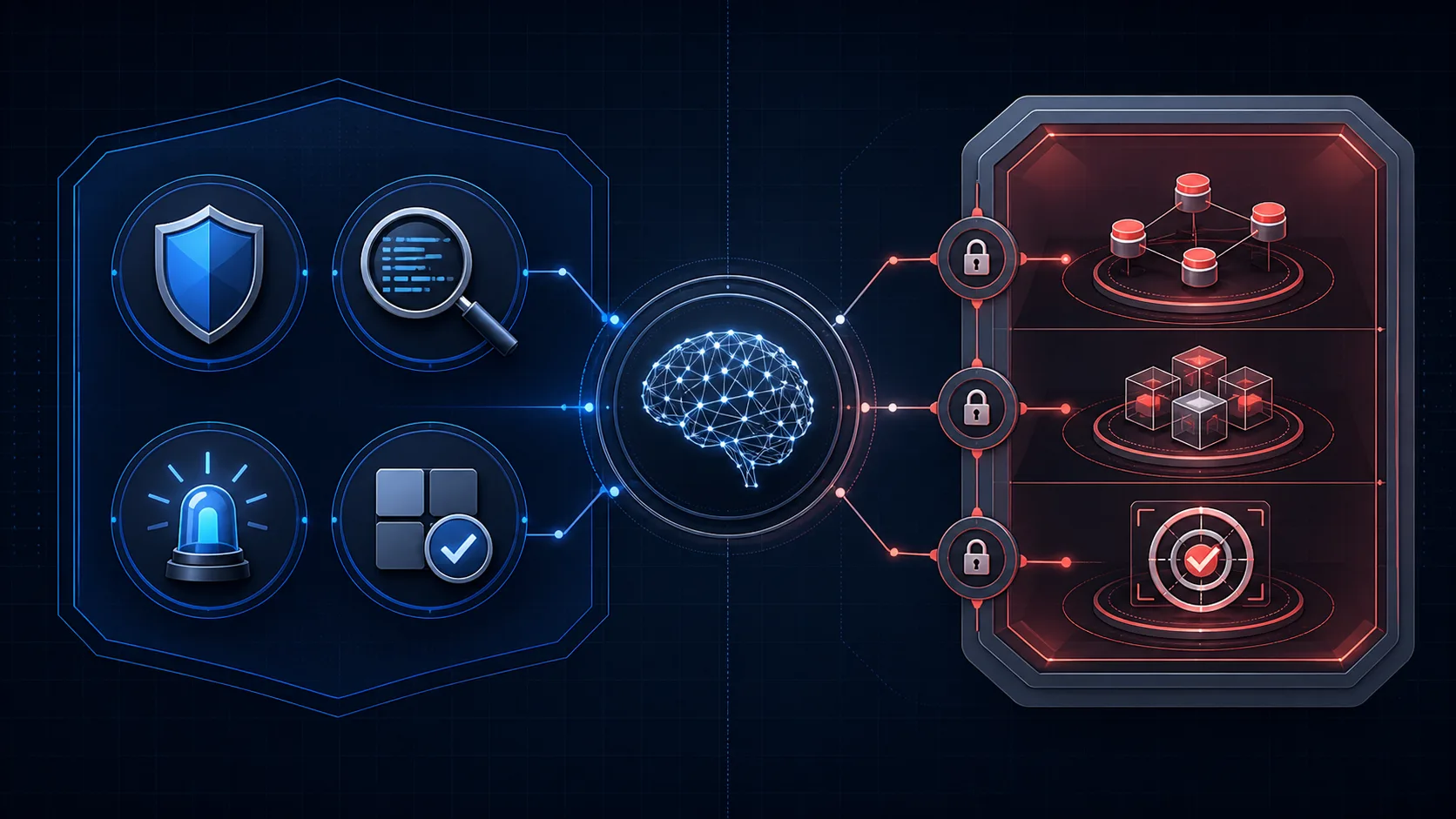
Daybreak Blue: the defensive default
Daybreak Blue provides approved defenders access to frontier capabilities with fewer unnecessary refusals during legitimate defensive workflows. OpenAI lists several intended uses:
- Finding, triaging, and prioritizing vulnerabilities.
- Reviewing code securely and developing threat models.
- Building detections and supporting incident response.
- Analyzing malware inside a controlled environment.
- Proposing remediations and validating patches.
Daybreak Red: advanced capabilities behind a second gate
Daybreak Red provides separately approved access to specialist cyber models. It is intended for explicitly authorized activities such as controlled vulnerability reproduction, proof-of-concept or exploit validation, penetration testing, red teaming, and complex system analysis. It is not the default choice for routine security work.
That distinction matters because advanced defensive research can resemble malicious activity when authorization and scope are unclear. By separating the tiers, OpenAI can support deeper testing without treating every security request as equally risky.
Why this matters
The larger story is not simply that OpenAI released another security model. It introduced a governance structure around capability. The program ties access to an approved person or organization, an approved workspace or API project, a specific model, and an allowed product surface.
For security teams, this could reduce friction in legitimate tasks such as secure code review and patch validation. For model providers, it offers a practical way to distinguish routine defensive help from higher-risk work that needs stronger verification and oversight.

Access is controlled, not automatic
Users must apply through OpenAI’s Trusted Access for Cyber process. Approval can depend on identity, organization, project, model, and product surface. Completing identity verification or receiving Blue access does not guarantee approval for Red.
The practical takeaway for security teams
- Start with Blue unless the engagement genuinely requires advanced reproduction or exploit validation.
- Document exactly which systems, repositories, and actions are in scope.
- Run sensitive work in an isolated environment with least-privilege permissions.
- Keep human review in the loop before actions cross a sandbox boundary or affect production.
- Treat model access as one control among many, not as a replacement for authorization, logging, and operational safeguards.
What to watch next
The key question is whether this tiered approach helps defenders move faster from findings to verified fixes without weakening safeguards. Watch for broader product availability, clearer approval timelines, and real-world evidence that Daybreak shortens vulnerability remediation while preserving oversight.
Official sources
OpenAI’s ChatGPT and Codex changelog
OpenAI’s Daybreak models and Trusted Access guidance