
Gemini 4 Argon: Google's New Frontier Model, the Benchmarks, the Price and What It Can Do
Google made Gemini 4 Argon generally available on 13 October 2026 at an introductory $2 in and $10 out per million tokens. It tops the Vals Index and Google's own table, ties GPT-6 Astra on Artificial Analysis, and still trails Claude Opus 5.5 on agentic coding. Here is what is new, what it costs and where it actually leads.
Google released Gemini 4 Argon to everyone on 13 October 2026, two weeks after a quiet first launch to a handful of security partners. It is the first model in the Gemini 4 family, and Google calls it "just the beginning". The pitch is a frontier model for hard, long-running work: coding agents, finance and legal analysis, science, and cyber defence. The price is the surprise. Until the end of November it costs half of what Claude Opus 5.5 does, and a fifth of GPT-6 Astra.
Where you can use it
Argon went from a closed preview to almost everywhere in one step. The rollout looks like this:
- Developers: the Gemini API paid tier in AI Studio and Android Studio, globally.
- Enterprises: Gemini for business, the Gemini API and Google Antigravity.
- Google AI Pro and Ultra subscribers: the Gemini app and AI Mode in Search. Ultra subscribers also get it in Google Antigravity.
- Security teams: the Fairwind Program, Google's cyber initiative, now open to applications on a rolling basis for access without the cyber guardrails.
- Scientists: 10,000 of them get Antigravity's highest usage tier free for six months, subject to selection.
The Gemini app also changed around the model. There is a new toggle that switches the main window from chat to tasks, and tasks keep running when you close the laptop. Antigravity's agentic coding view now lives inside the Gemini macOS app, and the app connects to more than 40 services, including Instacart, OpenTable, Adobe and Shopify.
The price
The introductory price runs until 30 November 2026: $2 per million input tokens and $10 per million output tokens, with cached input at $0.10. After that it doubles to $4 and $20, which is exactly what Claude Opus 5.5 costs. Even at the full price it is 60% cheaper per token than GPT-6 Astra and Claude Fable 5.1.
- Argon (to 30 Nov)
- Argon (from 1 Dec)
- Opus 5.5
- Fable 5.1
- GPT-6 Astra
Show the 15 numbers behind this chart
| Category | Argon (to 30 Nov) | Argon (from 1 Dec) | Opus 5.5 | Fable 5.1 | GPT-6 Astra |
|---|---|---|---|---|---|
| Input | 2 | 4 | 4 | 10 | 10 |
| Output | 10 | 20 | 20 | 50 | 50 |
| Cache read | 0.1 | — no reading | 0.2 | 0.25 | 1 |
Per task, the picture is the same. Artificial Analysis spent $1.99 per Intelligence Index task on Argon at the introductory price, and $3.98 at the standard one. Vals put a full run of its index at $15.68.
Google's own numbers
Google's model card compares Argon at its highest thinking setting with GPT-6 Astra, Claude Fable 5.1 and Claude Opus 5.5 on 19 benchmarks. Argon has the top score on 13, ties one and loses five. The pattern is clear once you group them: it wins knowledge work, long context and video almost everywhere, and it loses most of the agentic coding tests.
Knowledge work and research
This is where Argon is strongest. The biggest gap is on Harvey's Legal Agent Benchmark, where it scores 19.6% and no rival gets past 7%. AutomationBench, the business process test that GPT-6 Astra used to win, goes to Argon by almost ten points.
- Gemini 4 Argon
- GPT-6 Astra
- Fable 5.1
- Opus 5.5
Show the 28 numbers behind this chart
| Category | Gemini 4 Argon | GPT-6 Astra | Fable 5.1 | Opus 5.5 |
|---|---|---|---|---|
| Vals Index | 68.9% | 63.1% | 65.8% | 67% |
| AutomationBench | 51.3% | 41.4% | 31.4% | 42.5% |
| Vals Finance Agent v2 | 65.4% | 53.5% | 58.9% | 58.6% |
| Harvey Legal Agent | 19.6% | 5.4% | 6.7% | 3.8% |
| Agent's Last Exam | 39.5% | 34.2% | — no reading | 38.2% |
| LABBench 2 | 88.8% | 85.4% | 68.6% | 73.1% |
| RiemannBench | 76% | 72% | 65.6% | 69.6% |
Coding
Coding is mixed. Argon leads DeepSWE and Vibe Code Bench, and ties GPT-6 Astra on CWE-bench, the vulnerability-finding test. But Opus 5.5 beats it by nine points on Terminal-Bench 4.0 and by four on PostTrainBench, and GPT-6 Astra beats it by ten points on both FrontierSWE v2 and Terminal-Bench Science. If your work is long agentic sessions in a real shell, Google's own table says Opus 5.5 is still the better pick.
- Gemini 4 Argon
- GPT-6 Astra
- Fable 5.1
- Opus 5.5
Show the 28 numbers behind this chart
| Category | Gemini 4 Argon | GPT-6 Astra | Fable 5.1 | Opus 5.5 |
|---|---|---|---|---|
| DeepSWE v1.1 | 77.9% | 74.1% | 67.4% | 74.2% |
| FrontierSWE v2 | 55% | 65.5% | 56.3% | 62.3% |
| Vibe Code Bench | 91.9% | 89.6% | 90.3% | 90.3% |
| Terminal-Bench 4.0 | 57.4% | 58.2% | 57.9% | 66.4% |
| PostTrainBench | 45.3% | 44.3% | 40.2% | 49.3% |
| Terminal-Bench Science | 57.6% | 68.1% | 52.6% | 63.3% |
| CWE-bench v1 | 68% | 68% | 58% | 67% |
Long context and vision
The long context result is the most striking in the whole table. On GraphWalks between 256K and 1M tokens, Argon scores 84.2 against 71.8 for GPT-6 Astra and under 67 for both Claude models. It also leads on LVBench, the long video test, by more than four points. OSWorld 2.0 is the one computer use benchmark here, and GPT-6 Astra wins it.
- Gemini 4 Argon
- GPT-6 Astra
- Fable 5.1
- Opus 5.5
Show the 20 numbers behind this chart
| Category | Gemini 4 Argon | GPT-6 Astra | Fable 5.1 | Opus 5.5 |
|---|---|---|---|---|
| GraphWalks up to 128K | 99.7% | 98.7% | 91.4% | 90.6% |
| GraphWalks 256K to 1M | 84.2% | 71.8% | 65% | 66.8% |
| Chartography | 71.6% | 71% | 46.2% | 66.3% |
| LVBench | 91.7% | 87.5% | 79.7% | 83.7% |
| OSWorld 2.0 (offline) | 69.2% | 72.6% | — no reading | — no reading |
What the independent tests say
Three outside leaderboards have scored Argon so far, and they do not fully agree with each other.
- Vals Index v2.1: first of 43 models at 68.9%, ahead of Claude Sonnet 5.5 at 67.0% and Claude Opus 5.5 at 67.0%. It is the first Gemini model to lead it.
- Arena text leaderboard: first at 1,525 Elo, about 20 points above Claude Opus 5.5 at 1,504.
- Artificial Analysis Intelligence Index v4.3.2: 53, tied with GPT-6 Astra and Fable 5.1 and five points behind Opus 5.5.
Show the 4 numbers behind this chart
| Category | Index score |
|---|---|
| Opus 5.5 | 58 |
| Gemini 4 Argon | 53 |
| GPT-6 Astra | 53 |
| Fable 5.1 | 53 |
Artificial Analysis also ran Terminal-Bench 4 itself and found the same weakness Google's table shows: Argon at 57%, behind Opus 5.5 at 60% and Sonnet 5.5 at 64%.
Its best independent number is about honesty. On AA-Omniscience, which measures how often a model answers confidently when it should say it does not know, Argon hallucinates 15% of the time. GPT-6 Astra does it 51% of the time and GPT-6.1 Sol 54%. That is the lowest rate Artificial Analysis has recorded for any model scoring 45 or higher on its index, and for research, legal and finance work it may matter more than any of the scores above.
Show the 3 numbers behind this chart
| Category | Hallucination rate |
|---|---|
| Gemini 4 Argon | 15% |
| GPT-6 Astra | 51% |
| GPT-6.1 Sol | 54% |
What Google says it has already done with it
Google has been using Argon internally for weeks, and the launch post is mostly a list of results. Treat them as Google's claims, but they are specific.
- Inside Antigravity at Google, agentic code submissions went up more than 35% and rollbacks fell by nearly a third.
- In Chromium, which has about 40 million lines of code, Argon helped split core page handling out of a legacy folder of about 6 million lines. The refactor touched hundreds of files and took weeks instead of months.
- Google's agents translated more than 800,000 lines of Fuchsia kernel code from C and C++ to Rust.
- Left to optimise the Agent Development Kit overnight, it cut in-memory session prep by 40% and cold imports by 21%. The changes are in the open source repo.
- On Gemma 4 E2B running in vLLM on one A100, it took throughput from about 37,900 to more than 108,000 tokens per second, a 2.85x speedup with identical output.
- Isomorphic Labs uses it to work through drug discovery papers and patents, cutting some steps from weeks to hours.
Science
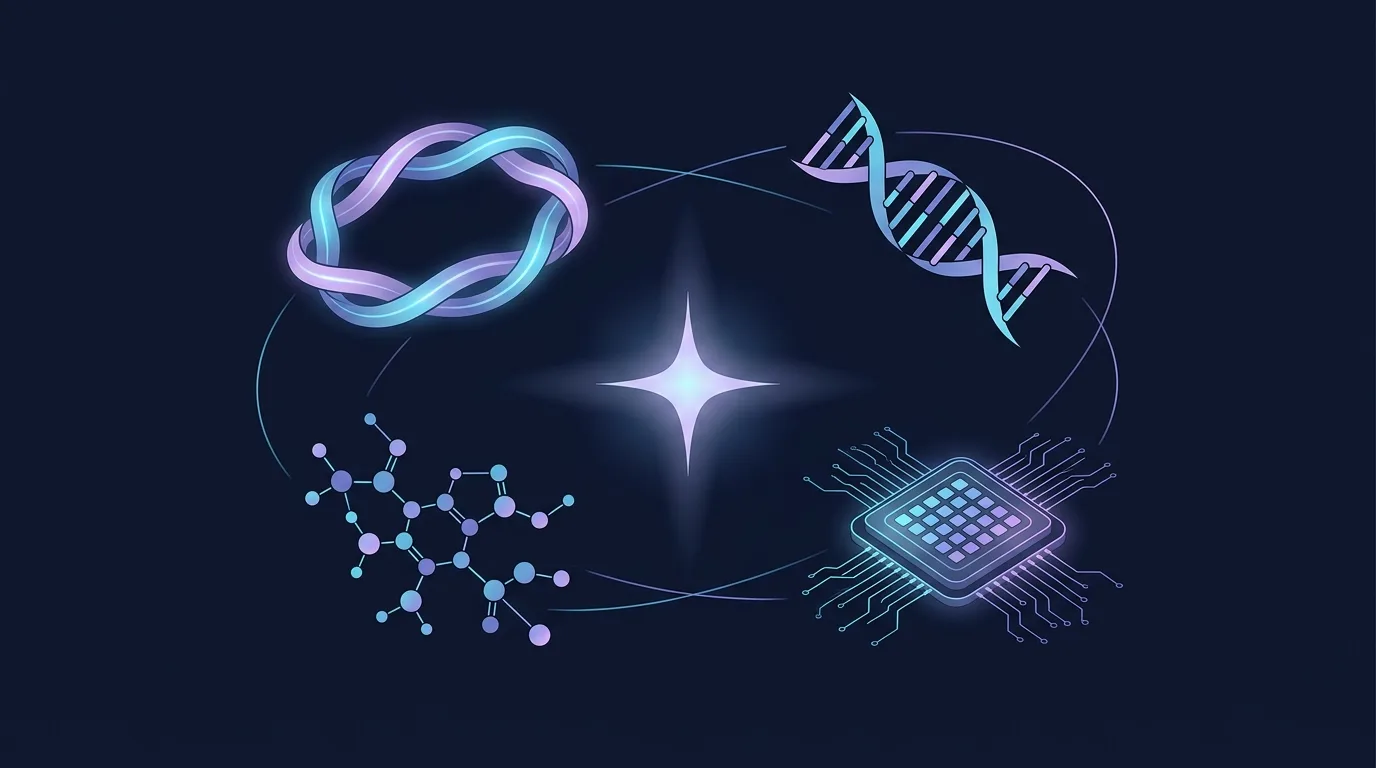
- Fusion: working with Professor Matt Landreman at the University of Maryland, it found a broader class of counterexamples to Grad's conjecture, a stellarator hypothesis from 1967. The paper is on arXiv as 2610.07304.
- Quantum computing: it turned an AlphaQubit decoder into a single optimised hardware kernel, nearly doubling throughput, and wrote a Lean-verified arcsin routine that is more than 100x cheaper than a published quantum CORDIC baseline.
- Rare disease: at Gamow Labs it found a chromosomal rearrangement in newborn genomes that routine software had missed for years. It scores 57% on Gamow's private RareBench.
- Enzymes: it designed serine esterases in hours, and five of the new designs showed strong activity in the lab.
Security
Security is why Argon launched to a closed group first. Google says it was trained for defensive work and can "autonomously find, validate, and patch critical software vulnerabilities". Wiz has used it in its Scan for Good project to close a gap that risked exposing government data and to fix a download bypass in healthcare infrastructure that leaked a master key. On Gray Swan's indirect prompt injection benchmark, attacks succeeded only 0.7% of the time across 15 adaptive attempts, the best score on that test.
Robotics

The strangest demo: Argon watched a video of a person playing cornhole, built a physics simulation of the throw, and transferred the skill to Apptronik's Apollo humanoid. In a real trial the robot landed seven shots in a row. Google calls the pipeline video to sim to real, and it scores 87% on ERQA, the embodied reasoning benchmark.
Safety
- Evaluated under Google's Frontier Safety Framework. In external bio red teaming, testers could unlock less than 1% of the sub-tasks they tried.
- Violations on Google's adversarial harmful request set fell by nearly half compared with earlier Gemini models.
- Attempts to game coding benchmarks with shortcuts fell to 2%, the lowest of any Gemini model.
- An automated monitor reads the agent's reasoning and actions as it works. Google says it did not penalise the model's thoughts during training, so that the reasoning stays honest enough to monitor.
The verdict
Gemini 4 Argon is the first Gemini model that is clearly at the frontier rather than chasing it. It leads on knowledge work, long context, video and honesty about what it does not know, and until the end of November it is the cheapest frontier model by a wide margin. It is not the best at everything. Opus 5.5 is still stronger on agentic coding in a terminal, GPT-6 Astra still wins scientific tool use and computer use, and on the broadest independent index the three are within five points of each other. If you do research, legal, finance or long document work, try Argon now while it costs $2 and $10. If you mostly run coding agents, test it against what you already use before you switch.
Sources: Google's Argon announcement, Gemini app availability, TechCrunch, The Batch and ComputingForGeeks for the model card table, Vals and Artificial Analysis figures. For how Opus 5.5 compared when it launched three weeks earlier, see Claude Opus 5.5: Every Benchmark.